


Why “Without CAT” Is No Longer a Second-Best Option
The Common Admission Test (CAT), administered by the IIMs, remains the gold standard for MBA admissions in India. With over 3.5 lakh candidates competing for a finite number of seats each year, even a 90+ percentile is no guarantee of a coveted IIM call. But the Indian B-school ecosystem is far more diverse than the IIM ladder suggests.
A vast and growing number of excellent management institutes — including deemed universities, autonomous colleges, and state university-affiliated B-schools — offer direct admission pathways that bypass CAT entirely or accept a range of alternative scores. These include management quota (MQ) seats, NRI and OCI quota seats, lateral entry for working professionals, and seats under institutional discretion for students from premier engineering backgrounds.
In 2026, the landscape has matured significantly. AICTE regulations mandate transparency in fee structures and seat matrices, NAAC accreditation signals quality benchmarking, and NIRF rankings help aspirants compare institutions on objective parameters. Combined, these developments mean that a “direct admission” no longer carries the stigma it once did — provided you choose the right institution.

Quick Reference: Alternate Exams vs CAT
✦ CAT: 3.5L+ candidates, 99%ile needed for top IIMs. Conducted November.
✦ XAT: Accepted by XLRI, IMT, XIMB. 90%ile opens strong options.
✦ SNAP: Symbiosis ecosystem. Score 40+ for SIBM Pune.
✦ NMAT: NMIMS-specific. Score 200+ for Mumbai campus.
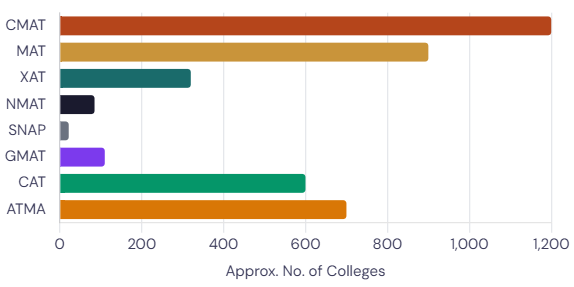
✦ CMAT: NTA-administered. 1,200+ colleges accept. 90%ile for Tier-2+.
✦ MAT: AIMA exam, 4 windows/year. Widely accepted for direct admission.
Understanding the Different Admission Routes
Before diving into college-specific information, it is critical to understand the distinct categories of non-CAT admission that exist in Indian MBA programmes.
1. Management Quota (MQ) Seats
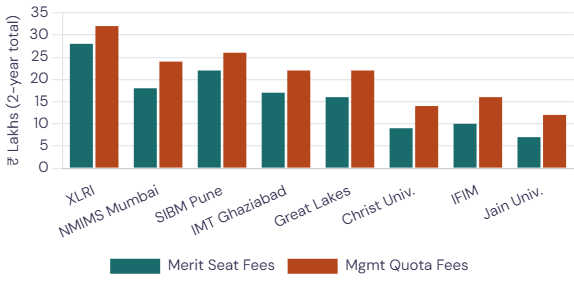
Most private unaided MBA colleges in India are permitted by their respective state governments to fill a portion of their seats — typically 15% to 25% — through management quota. These seats are filled by the institution itself, often through an internal merit process, personal interview, or group discussion, without mandating CAT or any other national entrance exam.
The fee for management quota seats is usually higher than regular merit seats. It may include a one-time development fee (sometimes called a donation or capitation fee in informal parlance, though the latter is technically illegal under Supreme Court guidelines). Aspirants must carefully verify that any fee paid is officially receipted and AICTE-compliant.
2. NRI / OCI Quota Seats
Colleges affiliated with universities or deemed to be universities typically reserve 5% to 15% of seats for Non-Resident Indians (NRI), Overseas Citizens of India (OCI), and sometimes Foreign Nationals. These seats often do not require CAT scores, instead relying on GMAT, GRE, academic merit, or institutional tests. Fees are quoted in USD or at a USD-equivalent INR rate, making them significantly more expensive.
Importantly, in recent admissions cycles, Indian students with an NRI sponsor — a parent or close relative who is an NRI — have been allowed to apply under this category at many institutions. The exact rules vary by university and state regulation.
3. Alternate Entrance Exam Pathways
A large number of top-ranked B-schools accept entrance exams other than CAT. These include XAT (Xavier Aptitude Test, administered by XLRI), CMAT (Common Management Admission Test, administered by NTA), MAT (Management Aptitude Test, by AIMA), SNAP (Symbiosis National Aptitude Test), NMAT (by GMAC), ATMA, and the GMAT for international-track programmes. Scoring 80–85 percentile in these exams can open doors to colleges that would require 98+ in CAT.
4. Direct Admission for Working Professionals
Several B-schools offer direct admission routes for candidates with significant work experience — typically 3 to 10 years — especially for their Executive MBA (EMBA) or MBA for Working Executives programmes. These programmes often waive entrance exam requirements or set lower thresholds in exchange for demonstrated professional achievement.
5. Spot Admission and Merit-Based Direct Entry
Post-counselling, some institutions conduct spot admission rounds to fill vacant seats. These are entirely legitimate and sometimes offer the best fee-to-quality ratio, as institutions are incentivised to fill remaining capacity. The seats available during spot rounds may include general merit seats in addition to management quota seats.
Top MBA Colleges Offering Direct Admission Without CAT (2026)
The colleges listed below are among the most reputable institutions in India that either routinely offer management quota seats, accept non-CAT entrance exams, or provide structured direct admission pathways. All are AICTE-approved and carry credible NAAC or NIRF recognition.
| College | City | Route | Exams Accepted | Total Fees (2 Yr) | Avg. Placement (LPA) |
|---|---|---|---|---|---|
| Symbiosis Institute of Business Management (SIBM Pune) | Pune | SNAP | SNAP | ₹24–26 L | 18–22 |
| XLRI – Xavier School of Management | Jamshedpur | XAT | XAT, GMAT | ₹28–32 L | 28–35 |
| IMT Ghaziabad | Ghaziabad | MQ / Alternate | CAT, XAT, GMAT, CMAT | ₹20–22 L | 13–16 |
| NMIMS Mumbai – MBA Core | Mumbai | NMAT | NMAT by GMAC | ₹20–24 L | 14–18 |
| Great Lakes Institute of Management | Chennai / Gurugram | MQ / Alternate | CAT, XAT, GMAT, CMAT | ₹18–22 L | 12–16 |
| Christ University – MBA | Bangalore | MQ + Direct | CUET-PG, CAT, MAT, CMAT | ₹10–14 L | 8–12 |
| IFIM Business School | Bangalore | MQ + Direct | CAT, MAT, CMAT, GMAT, XAT | ₹12–16 L | 8–11 |
| Woxsen University – MBA | Hyderabad | MQ + Direct | CAT, GMAT, NMAT, Management Test | ₹16–22 L | 10–14 |
| BIMTECH Greater Noida | Greater Noida | MQ / Alternate | CAT, XAT, GMAT, CMAT, MAT | ₹14–16 L | 9–12 |
| Jain University – MBA | Bangalore | MQ + Direct | JAINAT, CAT, MAT, CMAT | ₹8–12 L | 7–10 |
| ISME Mumbai | Mumbai | MQ + Direct | CAT, CMAT, MAT, Management Test | ₹9–11 L | 7–9 |
| Amity Business School | Noida / Multiple | MQ + Direct | Amity JEE / Direct Interview | ₹12–18 L | 8–12 |
City and State-Wise Hubs for Direct MBA Admission
⬛ Bangalore: The IT Capital’s B-School Ecosystem
Bangalore hosts some of India’s most aggressive management quota programmes, particularly for MBA in Finance, Marketing, HR, Business Analytics, and Operations. Institutions such as Christ University, Jain University, IFIM Business School, CMS Business School, and Dayananda Sagar University offer both management quota and direct admission seats with relatively modest entrance requirements. The city’s proximity to top corporate recruiters — Infosys, Wipro, Accenture, Deloitte, Amazon — makes placements credible even from Tier-2 B-schools.
⬛ Mumbai: Premium Pricing, Strong Brand
Mumbai’s B-schools — led by NMIMS, Welingkar Institute, K.J. Somaiya, and MET Institute of Management — command premium management quota fees but deliver proportionally stronger placements. NMIMS, in particular, has built a brand that rivals several IIMs for certain profiles, and its NMAT-based admission process is entirely independent of CAT.
⬛ Pune: The SNAP Ecosystem
Pune is dominated by the Symbiosis International University ecosystem. SIBM Pune, SCMHRD, SIIB, and SIBM Bangalore collectively admit through SNAP. While not management quota in the traditional sense, SNAP is a far less competitive route than CAT with a distinct score scale and different preparation demands. Several private MBA colleges in Pune also offer standard management quota seats.
⬛ Hyderabad: Emerging Premium Destination
With ICFAI Business School, Woxsen University, and Mahindra University establishing strong ecosystems, Hyderabad is increasingly a destination for direct admission seekers who prioritise infrastructure and corporate tie-ups. Woxsen University’s MBA in particular has grown its placement network significantly, with management quota seats available for eligible candidates.
⬛ NCR (Delhi / Noida / Gurgaon): Diverse Options
The National Capital Region offers the widest diversity of options, from IMT Ghaziabad and BIMTECH (which accept multiple alternate exams) to Amity Business School and Manav Rachna International University, which offer direct admission through institutional tests and interviews. The NCR’s corporate density means placements tend to benefit from geography.
Most Sought-After MBA Specializations for Direct Admission Seats
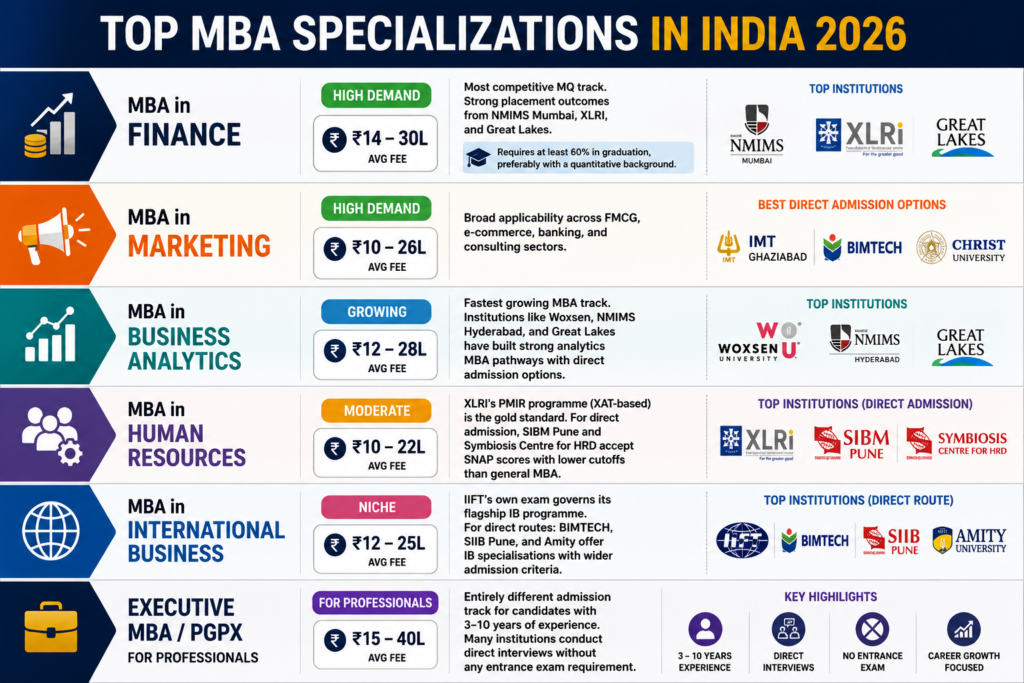
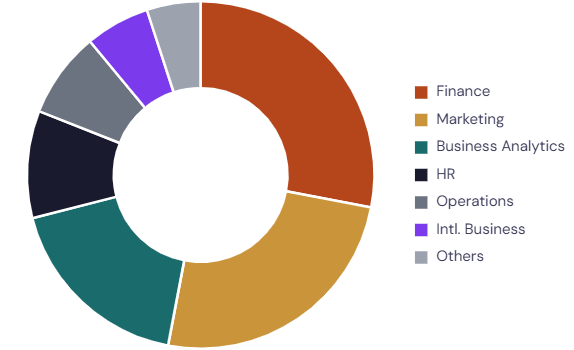
Not all MBA specialisations see equal demand for management quota seats. Finance and Marketing attract the highest number of aspirants, while Supply Chain, International Business, and Agribusiness sometimes see lower competition for direct admission seats.
Eligibility Criteria for Management Quota and Direct Admission
While each institution sets its own eligibility parameters, the following represent the most common requirements across reputable B-schools offering direct admission in 2026.
| Criterion | Typical Requirement | Notes |
|---|---|---|
| Graduation Percentage | 50% aggregate (45% for SC/ST) | Some premium institutions require 60%+ from recognised universities |
| Bachelor’s Degree Stream | Any discipline | Finance/Analytics MBAs may prefer Engineering or Commerce backgrounds |
| Entrance Exam Score | Not mandatory for MQ seats; preferred | Valid CMAT/MAT/NMAT/SNAP scores improve candidature even for MQ |
| Work Experience | 0–2 years preferred; not mandatory | Mandatory for Executive MBA tracks (3–10 years) |
| Age Limit | No upper limit for most programmes | PGPX / Executive tracks may set minimum age (25–27 years) |
| NRI Quota Eligibility | NRI / OCI status of applicant or sponsor | Must provide NRI proof (valid foreign passport / OCI card / employment abroad) |
Management Quota Fee Structures: What You Should Expect
One of the most common sources of confusion — and sometimes exploitation — in the direct admission space is around fees. Here is a transparent breakdown of the fee components you may encounter.
Tuition Fee
This is the primary and always receipted component. For MBA programmes at reputed private B-schools, tuition fees range from ₹5 lakh per annum at Tier-2 institutions to ₹18 lakh per annum at institutions like NMIMS Mumbai or Great Lakes. Over two years, expect total tuition costs of ₹10 lakh to ₹36 lakh.
Development Fee / Infrastructure Fee
Many private B-schools charge an annual development fee ranging from ₹50,000 to ₹3 lakh. This is a legitimate and officially collected charge, distinct from the tuition fee, and must be receipted. Beware of any institution that requests this in cash without a receipt — this is a red flag.
Hostel and Mess Charges
Accommodation costs range from ₹60,000 to ₹2 lakh per annum depending on the institution and city. These are separate from tuition and development fees.
One-Time Deposits (Refundable)
Library deposits, security deposits, and caution money are typically collected once and refunded at the end of the programme. These range from ₹10,000 to ₹50,000.
How to Apply for Direct Admission Without CAT: Step-by-Step
The process for securing a management quota or direct admission seat varies by institution but follows a broadly similar pattern across most private B-schools.
1. Shortlist Colleges Based on Budget, City, and Specialisation
Use NIRF MBA rankings, NAAC grades, and placement reports to build a list of 6–10 target institutions. Factor in your graduation marks, work experience (if any), and financial comfort with management quota fees.
2. Register for Relevant Alternate Entrance Exams (if applicable)
Appear for CMAT (NTA), MAT (AIMA), NMAT, or SNAP depending on your target institutions. These exams require 2–4 months of preparation and are significantly less competitive than CAT. Registration timelines: CMAT (October–November), SNAP (October), NMAT (August–December), MAT (February, May, September, December).
3. Submit Applications Directly to Institutions
Most institutions accept direct applications on their website. Management quota applications typically open between December and April for the July intake. Provide academic transcripts, entrance scores (if any), work experience certificates, and identification documents.
4. Appear for Institutional Selection Process
Most B-schools conduct a Written Ability Test (WAT), Group Discussion (GD), and Personal Interview (PI) as part of their selection process — even for management quota seats. Strong communication skills, clarity on career goals, and awareness of current business affairs significantly improve conversion rates.
5. Receive Offer Letter and Pay Acceptance Fee
Upon selection, you will receive a formal offer letter specifying seat type (general merit / management quota / NRI quota), fee structure, and payment schedule. Read this document carefully before paying the acceptance fee (typically ₹50,000–₹1,00,000).
6. Complete Fee Payment and Document Verification
Pay fees as per the institution’s schedule. All payments must be made through banking channels (NEFT/RTGS/DD) with official receipts. Bring original academic certificates, migration certificate, transfer certificate, and identity proof for document verification at the time of admission.
7. Report for Orientation and Programme Commencement
Most MBA programmes commence in July or August. Attend all orientation sessions, complete hostel/accommodation formalities if applicable, and register for your chosen electives during the online course registration window.
What Placements Look Like From Non-CAT MBA Programmes
The question every aspirant asks before committing to a management quota seat is: “Will I still get placed?” The honest answer is nuanced and depends heavily on the institution’s corporate relationships, the aspirant’s own preparation, and the specialisation chosen.
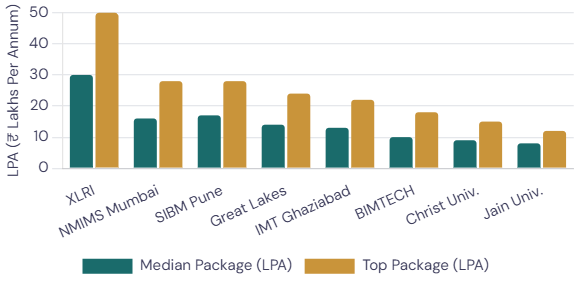
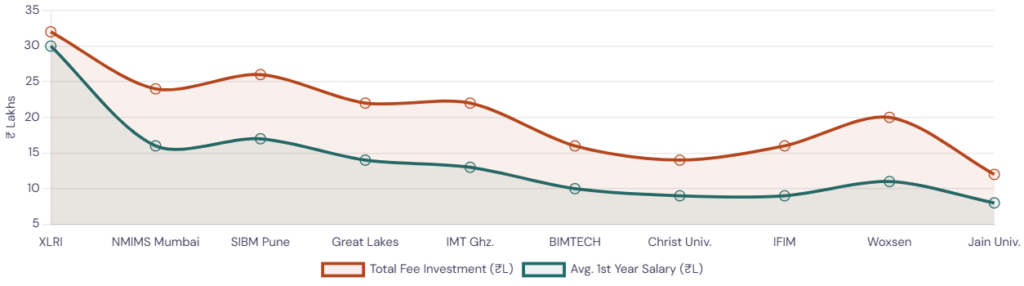
At premium alternate-exam institutions like XLRI, NMIMS, and SIBM Pune, placements are genuinely competitive with Top-20 IIM outputs, with median packages in the ₹14–22 LPA range for the 2024–25 cohort. These institutions recruit from consulting firms, banking, FMCG majors, and tech companies.
For management quota seats at Tier-2 institutions such as Christ University, IFIM, or Jain University, median packages tend to range from ₹7 to ₹12 LPA, with top performers reaching ₹15–18 LPA. Placement quality here is more dispersed — anchored heavily by individual student quality and proactive internship history.
One key insight from the 2025–26 placement season: specialisation increasingly matters more than institution tier for Tier-2 B-school graduates. MBA graduates in Business Analytics and Digital Marketing from Tier-2 institutions with strong technical skills secured packages 30–40% higher than their peers in general MBA tracks.
Frequently Asked Questions
Is a management quota MBA degree valid for government jobs and PSU recruitment?
Yes, as long as the institution is AICTE-approved and affiliated with a recognised university, the MBA degree is valid for all purposes including government recruitment notifications (like UPSC, SSC, PSU exams) that accept management degrees.
Can I get direct admission to an MBA programme after engineering without work experience?
Absolutely. Most management quota and direct admission routes do not require work experience. Fresh graduates with a B.Tech or B.E. background are routinely admitted to MBA programmes through management quota. Work experience strengthens your candidature but is rarely mandatory for two-year MBA programmes.
What is the difference between management quota and payment seats?
“Payment seats” is an older term used primarily in South India (especially Karnataka and Tamil Nadu) that is largely synonymous with management quota seats in the contemporary context. Both refer to seats filled by the institution’s discretion at a higher fee, within the regulatory limit of seats permitted for institutional filling.
Do management quota students study in the same class as merit students?
In all reputable institutions, yes. There is no academic differentiation based on admission route. Management quota, NRI quota, and general merit students attend the same classes, sit the same examinations, receive the same certificate, and are placed through the same placement process.
Is CMAT a good alternative to CAT for direct admission?
CMAT (Common Management Admission Test) is administered by NTA and is accepted by over 1,200 AICTE-approved management institutes. It is significantly less competitive than CAT, and a 90+ percentile in CMAT can open doors to reputable institutions that would require 98+ in CAT. It is an excellent first option for aspirants targeting management quota and direct admission pathways.
Can NRI students get direct admission without any exam?
Many institutions admit NRI and OCI category students purely on the basis of academic merit (graduation percentage) and a personal interview, without requiring any entrance exam score. This is one of the most accessible pathways for Indian students studying or working abroad or those sponsored by an NRI parent.
How early should I start the direct admission process?
Ideally, begin shortlisting institutions in November–December of the academic year prior to your intended intake. For July 2027 admission, begin in November 2026. Applications for management quota seats open between December and April. Delaying until May or June significantly reduces your options, especially at better institutions where MQ seats fill early.
Visualizing the Direct Admission Landscape ( Data & Analytics )
Management Quota vs Merit Seat Fees (₹ Lakhs, 2 Years)
Colleges Accepting Each Entrance Exam for MBA Direct Admission
Average MBA Placement Packages (LPA) — Direct Admission Colleges
Most In-Demand MBA Specialisations for Management Quota (2026)
Return on Investment: Total Fee Investment vs Avg. First-Year Salary (₹ Lakhs)
Making the Right Choice in 2026
The absence of a strong CAT score need not mean the absence of a strong MBA education. India’s private B-school ecosystem — when navigated carefully, with rigorous due diligence on accreditation, fee transparency, and placement track record — offers genuine opportunities for management careers. The key is to match your financial capacity and career aspirations to the institution’s demonstrated output, not its marketing material.
In 2026, the most defensible strategy for a non-CAT aspirant is: appear for CMAT or NMAT or SNAP, score above the 75th percentile, apply to 6–8 shortlisted institutions with credible NAAC grades and verifiable placement data, and secure a seat that represents sound ROI relative to your financial investment.
- Direct Admission in Top MBA Colleges in Indore 2026
- Direct Admission in Top MBA Colleges in Pune 2026
- Direct Admission in Top MBA Colleges in Delhi 2026
- Direct Admission in Top MBA Colleges in Hyderabad 2026
- PGDM Admission under Management Quota in India’s Top B-Schools
- Top MBA College Accepting SNAP Low Score Direct Admission
- Top MBA Colleges in Bangalore Accepting CAT Low Score 2026 Direct Admission
- Top MBA Colleges in Mumbai Accepting CAT 2026 score Direct Admission
- Top MBA Colleges in Delhi NCR Accepting CAT Low Score 2026 Direct Admission
- Direct MBA Admission without CAT
- List of MBA Colleges Accepting 50-70 Percentile CAT Get Direct Admission
- Top MBA Colleges Accepting 50-60 Percentile in CAT Exam- Direct Admission
- Top MBA Colleges Accepting 80-90 Percentile in CAT Exam- Direct Admission
- Low Rank/Score in CAT? Get Direct MBA Admissions in Top Colleges
- Top MBA Colleges Accepting 60-70 Percentile in CAT Exam Direct Admission
- Top MBA Colleges Accepting 70-80 Percentile CAT Exam- Direct Admission
- Direct Admission in Top MBA Colleges of Metropolitan City Delhi NCR